
Intensive Trauma Therapy: Get Unstuck in 5 Days, Not 5 Months
You've counted it out before: fifty minutes, once a week, and half of it goes by just catching your therapist up on the week, before you even reach the thing you actually needed to talk about. You leave feeling like you almost got somewhere. Almost. Then a week passes, and some of what you built has already gone cold by the time you're back in that chair.

A controlled burn, not casual weeding
This way of managing mental health is the approach of a casual gardener: pulling a few surface weeds once a week, watching some of the growth return by the time you're back, never quite reaching whatever's rooted underneath. Foresters manage more serious overgrowth differently. They set a controlled burn: deliberate, hot, and fast, clearing decades of dead brush and thatch in a single afternoon so whatever grows next can reach the soil.
What Is Intensive Trauma Therapy?
Intensive trauma therapy concentrates months of weekly sessions into a focused block of a few consecutive days, giving trauma work the sustained time it needs to move past the surface. If weekly therapy is endless weeding, a therapy intensive is the controlled burn. A concentrated block of therapy, days instead of minutes, deliberately set aside rather than squeezed into the calendar's cracks, powerful and sustained enough to reach past the surface growth and into whatever's rooted underneath.
One of the first clients I offered an intensive had already been in therapy for years, and had struggled repeatedly with suicidal ideation. Each time in the past, he had rushed to resolve whatever life stressor had triggered the most recent suicidal thoughts, had learned new coping skills, changed medications, made safety plans, and the thoughts had faded into the background, but they always came back eventually. In that intensive he was finally able to slow down, look at his entire history of suicidality, and inquire deeply into what was underneath it. He discovered that he was still carrying a deep conviction, based on his childhood religious upbringing, that he was inherently a bad person and didn't deserve to live. Uprooting this conviction was a huge job. It required processing his complicated relationship with his religion, his parents, his culture, and his basic beliefs about the value of human life. The intensive format finally gave him enough space and support to take that job on, and to rediscover the wholehearted joyful life that he had left behind in childhood.
Why Weekly Therapy Often Isn’t Enough for Trauma
Weekly therapy applies the same limited amount of treatment time to every client, whether or not that's appropriate for the depth and seriousness of what an individual is going through. Most of us grew up assuming weekly therapy was simply how therapy works, the same way you assume a car needs an oil change every few thousand miles regardless of what's wrong with it. A quick top-off on a schedule works fine when nothing under the hood is actually broken. But when the check engine light has been on for years and nobody's popped the hood to look, fifty minutes of routine maintenance once a week isn't going to find, let alone fix, what's wrong. At some point the car needs to come off the road entirely and sit in the shop long enough for someone to trace the problem to its source.
Trauma works on a timeline that doesn't care about your weekly appointment. When something finally starts to surface, a memory, a pattern, a part that's been protecting something for years, it doesn't make much sense to stop mid-repair, push the car back onto the road, and tell the mechanic you'll come back a week later.
What Happens During an Intensive

Intensive trauma therapy in the comfort of your own home
An intensive includes a 90-minute pre-session to set goals, 12 hours of core therapy in 2 to 3 consecutive days, and a 90-minute follow-up to consolidate changes, all conducted virtually.
Altogether, that's about 15 hours of treatment in 4 to 5 days. You've probably heard that healing takes time, and it does, but there's a real difference between healing taking time and healing being deliberately rationed out in fifty-minute increments once a week for months. Compare those 15 hours of therapy concentrated into 4 days of total focus, or spread across eighteen separate weekly sessions, over nearly 5 months, each one starting cold, and the difference speaks for itself.
Roughly 6 in every 100 people will experience PTSD at some point in their lives, and many types of childhood adversity can raise that likelihood, even situations or events that you might not immediately think of as "traumatic" in and of themselves. For people whose trauma isn't a single incident but something prolonged or repeated, the kind that shapes how you see yourself and relate to others over years rather than after one bad event, the World Health Organization's ICD-11 now recognizes Complex PTSD, or C-PTSD, as its own distinct diagnosis. That distinction matters here. Long-accumulated overgrowth doesn't clear with a weekly weeding schedule. It clears with fire.
Who Is Intensive Trauma Therapy For?
Intensive trauma therapy tends to fit people who've already tried weekly therapy and know they need a more concentrated approach, and who can set aside a few consecutive days to focus fully on the work. This format isn't for everyone, and it isn't meant to be. It tends to fit people carrying real urgency. They don't want to wait eighteen weeks to feel different. They want to feel different now, and they're willing to commit to a more intense process to get there.
This is individual therapy, but people often come into it because they're already involved in couples or family therapy and they realize that something from their past is holding them back from showing up the way they need to in their current relationships.
How Much of a Difference Can an Intensive Make?
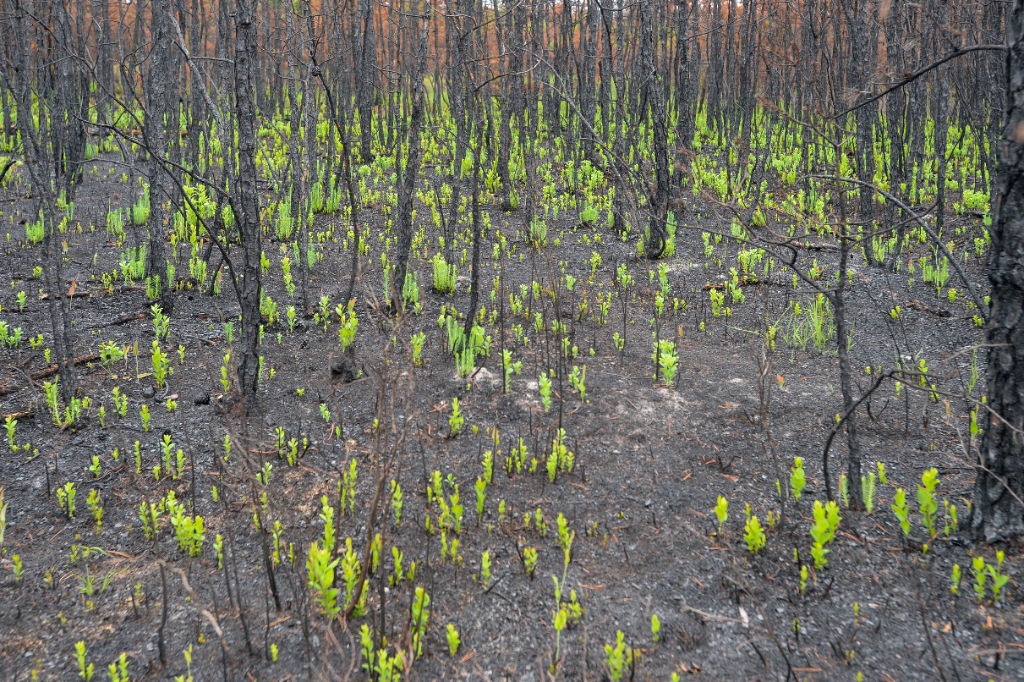
Space for something new to grow
An intensive can release years of trauma, ingrained limiting beliefs, and persistent emotional blocks in a matter of days. After that, the ground is finally clear. Then the therapist gets out of the way and lets the most important part happen. No gardener ever made a rose. Freed of their burdens, exposed to light, long-buried parts of the client start to express themselves again, and the client finally has the calm and clarity to cherish and cultivate them. People are wonderfully, endlessly different, so when people ask me, "What will I be like after a therapy intensive?", the most accurate answer I can offer is, "More yourself." Here's an example of one client's outcomes. You are probably very different from her, but I find that examples are still often helpful:
One of my intensive clients came in because of long standing struggles with sexual intimacy. She started weekly therapy years earlier, when she started having panic attacks whenever her partner initiated sex. She had overcome the panic attacks with breathing techniques, positive self-talk, systematic desensitization, and couples exercises to build intimacy and reduce anxiety. But she still always felt like sex was a struggle, and she had to use all of her skills every time to keep the panic attacks at bay. She never experienced wholehearted sexual desire, only varying degrees of dread and acceptance. A few weeks after processing the trauma of her childhood sexual abuse in a therapy intensive, she reached out to tell me that, for the first time, she had started to initiate sex with her partner naturally and spontaneously, and although the experience of genuine sexual desire was still very confusing and unfamiliar for her, she was overjoyed to discover that it had truly existed in her all along, deep down.
Schedule a free consultation call to see if a therapy intensive is right for you.
Intensive Trauma Therapy FAQs
Get answers to a few common questions about how this format works.
Is intensive trauma therapy covered by insurance?
No. Intensives are private pay, which allows the format, timing, and depth of the work to be built entirely around what you need rather than what an insurance company's session limits allow.
How long does intensive trauma therapy last?
In my practice, a typical intensive runs about 15 hours across 4 to 5 days: a 90-minute pre-session, 12 hours of core work over 2 to 3 days, and a 90-minute follow-up session afterward. Some clients opt for longer intensives, especially when they have particularly profound childhood trauma or multiple issues they want to address.
Is intensive trauma therapy more effective than weekly sessions?
It depends on what you need. For many clients, intensives are dramatically more effective than weekly sessions for processing trauma and breaking long-standing behavior patterns that haven't responded to other approaches. On the other hand, many clients still continue with weekly therapy after their intensives, because they find value in the ongoing support and strong relationship they can build by seeing the same therapist for years. These approaches support each other, they shouldn't be seen as replacements.
Is a virtual intensive as effective as an in-person intensive therapy retreat?
Yes. Some intensive trauma therapy programs are structured as in-person retreats, and for some people, changing location matters. But the depth of an intensive doesn't come from the setting, it comes from sustained, uninterrupted time, which telehealth can offer just as fully. A virtual intensive also removes huge barriers inherent to in-person retreats: travel costs, travel time, and the disruption of an unfamiliar environment right when stability matters most. Many clients find doing the work from a space that's already familiar and safe supports the process rather than working against it.
What therapy modality do you use in your intensives?
I use Internal Family Systems, or IFS, an approach that treats you as made up of different parts, each carrying its own history and its own job, some formed a long time ago and never revisited since. You can read more about how IFS works in general my IFS Therapy page, and IFS Intensives in particular on my IFS Intensives page.
This post was researched and drafted with the help of AI and personally reviewed, edited, and expanded by Cay, including all client examples and clinical perspectives.
Written by Cay Schubert